
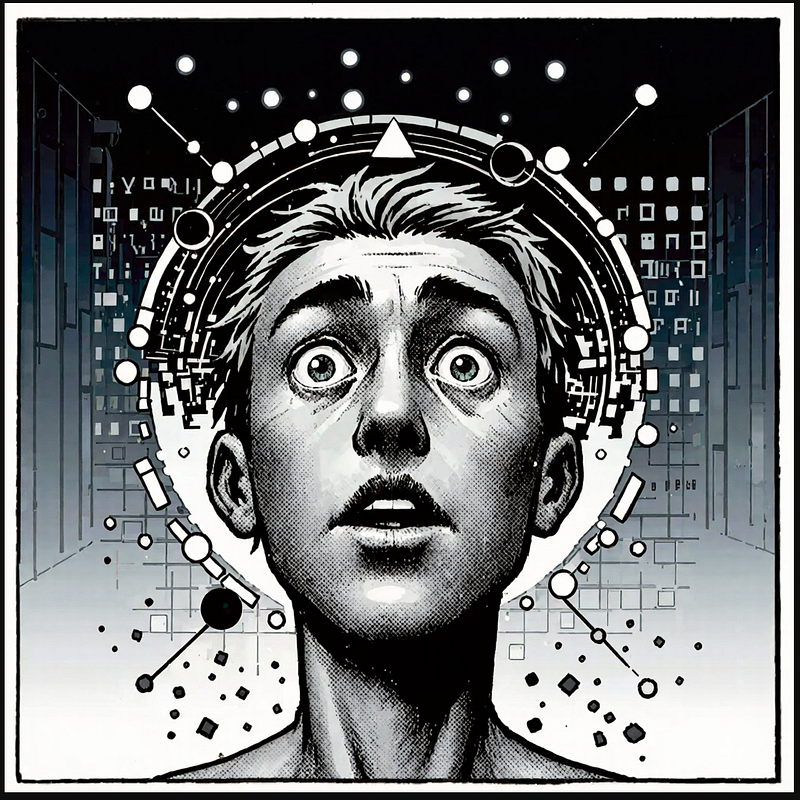
There is an old human itch to know what is really real.
Not just what appears real. Not just what feels real from the inside. We want the final answer. The floor beneath the floor. The thing that would still be true if every illusion were stripped away.
That desire makes sense. Nobody wants to be fooled. Nobody wants to spend a life caring about shadows, only to discover that the real thing was somewhere else the whole time.
But there is another possibility worth taking seriously: maybe base reality matters less than we assume.
Maybe the life we actually live, suffer through, love inside, remember, and interpret is not made less meaningful just because it may not be the final layer of things.
This idea has become more visible because of simulation theory. Maybe we live in a simulation. Maybe consciousness is running on some substrate we do not understand. Maybe the physical world is not fundamental. Maybe matter itself is an appearance generated by deeper laws. These are interesting questions, and some of them may even be answerable one day.
Still, the practical question remains.
What changes?
If you wake tomorrow and learn that this world is simulated, your coffee still tastes bitter. Your friend still needs you to call. Your back still aches. The person you hurt still remembers what you said. The person who loves you still waits for some sign that you are there.
A simulated grief would still be grief from the inside.
A simulated child would still need comfort.
A simulated sunset would still be seen, and seeing it would still do whatever sunsets do to the human animal. It would slow the breath. It would make the room quiet. It would remind you that the day has ended and that you are still here.
We tend to treat ultimate reality as the judge of all lesser realities. If something is not base level, we assume it is somehow fake. But this is too simple. It confuses origin with value.
A novel is not “real” in the same way a chair is real. Yet people have cried over invented deaths. They have changed their minds because of invented conversations. They have carried fictional places inside them for decades. The fact that Anna Karenina does not exist as a living woman does not mean the experience of reading her is empty.
Dreams are similar. Most dreams vanish quickly, but some leave a mark. You wake with your heart racing. You wake ashamed, relieved, lonely, or grateful. The dream was not true in the ordinary sense. But the fear was true. The longing was true. The body did not wait for a metaphysical ruling before reacting.
The same is true of games, rituals, memories, songs, and promises. Much of human life happens inside shared structures that are not reducible to bare matter. Money is paper, metal, numbers in a database, and collective belief. Marriage is a legal status, a social bond, a private vow, and a long series of daily acts. A nation is not a rock you can pick up, but people have died for nations, fled them, built homes in them, and been crushed by them.
Our lives are already layered.
We do not usually ask whether love exists at the most basic level of physics before deciding whether it matters. We do not demand that justice be made of atoms before we care about injustice. We live at the human scale because that is where our pain and responsibility are located.
This does not mean truth is irrelevant.
It matters whether a doctor’s diagnosis is right. It matters whether a bridge can hold weight. It matters whether someone is lying to you. Reality pushes back, and any philosophy that ignores that pushback becomes useless very quickly.
But “truth matters” does not have to mean “only the deepest layer matters.”
There are different kinds of truth. There is the truth of what a thing is made of. There is the truth of what it does. There is the truth of how it is experienced. There is the truth of what it asks from us.
A table may be mostly empty space at the atomic level, but you should still not try to walk through it. Your body lives at the level where the table is solid. That level is not a mistake. It is the scale where your life happens.
Base reality, if such a thing can even be named, may be important in the way foundations are important. But most of us do not live in the foundation. We live in the rooms above it. We eat there. We argue there. We sit awake at night there. We notice the light coming through the curtains there.
A foundation can explain why the house stands. It does not replace the house.
This is where some discussions of simulation theory become oddly thin. They treat the discovery that reality might be computed as a kind of cosmic eviction notice. If the world is simulated, then nothing matters. If consciousness is generated, then love is only chemistry. If the self is a process, then the self is an illusion.
But “only” is doing too much work.
Love may involve chemistry. That does not make it small. Music involves vibrating air. That does not make a song less capable of ruining your afternoon or saving it. Thought may depend on neurons. That does not make thinking meaningless.
Explaining a thing is not the same as dismissing it.
This is a mistake we make often. We look underneath an experience, find mechanisms, and decide the experience has been debunked. But a mechanism is not always a demotion. Sometimes it is just the way a miracle looks when viewed from below.
The deeper question is whether meaning requires finality.
Does a life need to be planted in ultimate reality to matter? Or is it enough that it is lived by someone?
I think it is enough.
A mother comforting her frightened child does not need access to the source code of the universe. The act matters because fear is present and comfort is possible. A man apologizing after years of silence does not need to solve metaphysics first. The apology matters because a wound was made, and some attempt is being made to answer it.
The moral world is local in that way. It appears wherever beings can suffer, care, remember, hope, and be harmed.
If our world is not base reality, then our duties do not disappear. They may become stranger, but they do not become lighter. Pain still asks for mercy. Beauty still asks for attention. Other people still ask, by their very existence, that we not treat them as props in our private story.
That may be the real test of any reality: not whether it is first, but whether anything can matter inside it.
And things do matter here.
We know this before we explain it. We know it in hunger, in embarrassment, in the small panic of waiting for medical results, in the relief of hearing a familiar car in the driveway. We know it when a room changes after someone leaves it. We know it when an ordinary object becomes unbearable because it belonged to someone who is gone.
A philosopher can question the structure of the world. A physicist can question the nature of matter. A computer scientist can question whether consciousness could run on another substrate.
Good. Let them.
But after the questions, someone still has to wash the dishes. Someone still has to sit beside the hospital bed. Someone still has to decide whether to forgive, whether to tell the truth, whether to keep going.
That is not a lesser reality. That is the reality given to us.
Maybe base reality exists somewhere underneath all this, silent and unreachable. Maybe it does not. Maybe the concept itself is too neat for whatever the universe actually is.
Either way, we live here.
And “here” is not nothing.
Like My Work? Want an Easy Way to Support Me?
Hi there! If you’ve enjoyed my work why not click the link below and Buy Me A Coffee? It’s simple and coffee keeps my creative and intellectual juices flowing!
Just click on the image below and it’ll take you to my Buy Me A Coffee page. Thanks so much for reading and supporting me!