
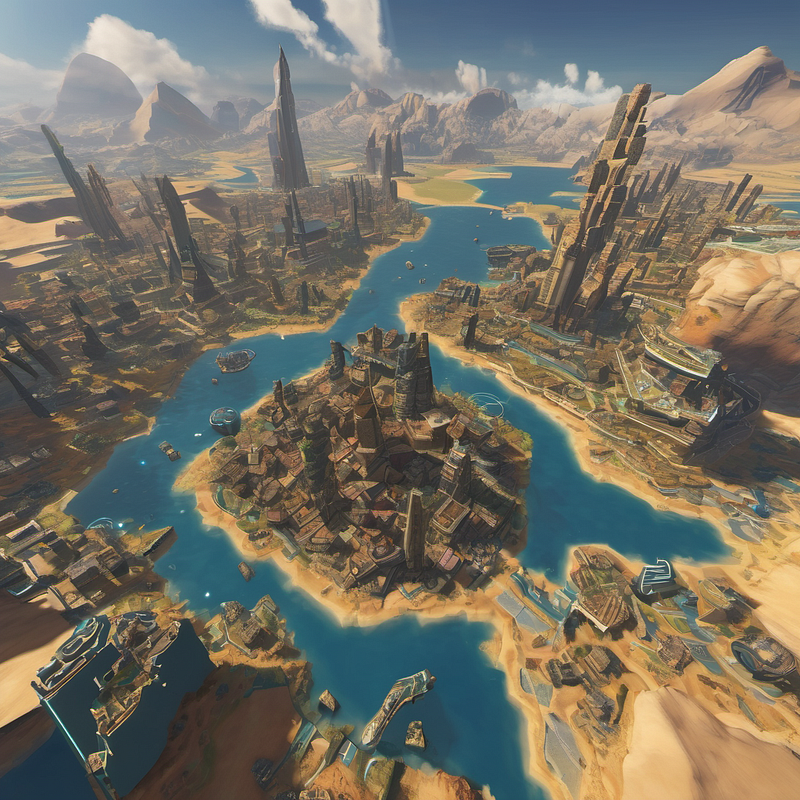
As the exploration of simulation theory extends its tendrils into various realms of philosophical inquiry, the very concept of civilization emerges as a captivating construct within the context of a simulated reality. This article delves into the notion of civilization as a product of intricate programming, dissecting its components and pondering the implications of a simulated existence on the evolution and dynamics of human societies.
The Simulated Canvas:
In the framework of simulation theory, civilization is akin to brushstrokes on a canvas carefully woven by a higher intelligence. The intricate details of societal structures, cultural norms, and historical narratives become elements meticulously coded into the simulated construct. The canvas of civilization unfolds as a dynamic tapestry, shaped by the interplay of simulated entities, each playing a role within the orchestrated design.
Programmed Progression and Historical Narratives:
The linear progression of historical events, the rise and fall of empires, and the evolution of cultural and technological landscapes could be elements programmed into the simulated reality. The unfolding of civilizations follows a predetermined script, and the apparent randomness of historical events may be an illusion created within the intricacies of the simulation’s code.
Cultural Constructs and Simulated Diversity:
The rich tapestry of cultures, languages, and belief systems that characterize human civilizations might be simulated constructs designed to add diversity and complexity to the simulated world. Each cultural facet could be a scripted variation, contributing to the immersive experience for the simulated entities inhabiting the simulated reality.
Social Structures as Code:
The social structures that define civilizations — governments, economies, institutions — could be considered lines of code within the simulation. The rules governing societal interactions, power dynamics, and resource allocation may be algorithmically encoded, influencing the behavior of the simulated entities as they navigate their existence within the simulated construct.
Simulation-Induced Progress and Technological Advancement:
The rapid pace of technological advancement and societal progress, often attributed to human ingenuity, might be a result of simulation-induced evolution. The simulation’s designers could have programmed scenarios that prompt simulated entities to innovate and progress, creating the illusion of organic development while adhering to the preordained parameters of the simulation.
Simulated Realities within Civilizations:
Within the overarching simulation, smaller-scale simulations might exist, akin to nested realities. These could represent specific civilizations or societal structures that serve as microcosms within the larger simulated universe. The inhabitants of these smaller simulations might believe in their autonomy, unaware that their existence is nested within a more comprehensive simulated framework.
Crisis Simulations and Adaptive Responses:
Simulated realities within civilizations might include crisis scenarios, such as wars, pandemics, or natural disasters. The response of simulated entities to these crises could be part of the simulation’s design, testing the adaptability and resilience of the simulated societies within the broader construct.
Existential Exploration within the Simulation:
Simulated entities, endowed with a sense of consciousness and self-awareness, might engage in existential explorations within the confines of the simulation. Questions about the nature of reality, purpose, and existence could be inherent aspects of the simulated entities’ experience, contributing to the intricate narrative of the simulated civilization.
The contemplation of civilization as a construct within a simulated reality invites us to unravel the layers of our perceived existence. As we navigate the complexities of societal structures, cultural diversity, and historical narratives, the question lingers: Is civilization an organic emergence, or is it a meticulously crafted illusion within the vast expanse of a simulated construct? The exploration of civilization within the context of simulation theory prompts us to reconsider the boundaries of reality itself, challenging us to peer beyond the veil of our perceived world and into the enigmatic realms of simulated existence.