
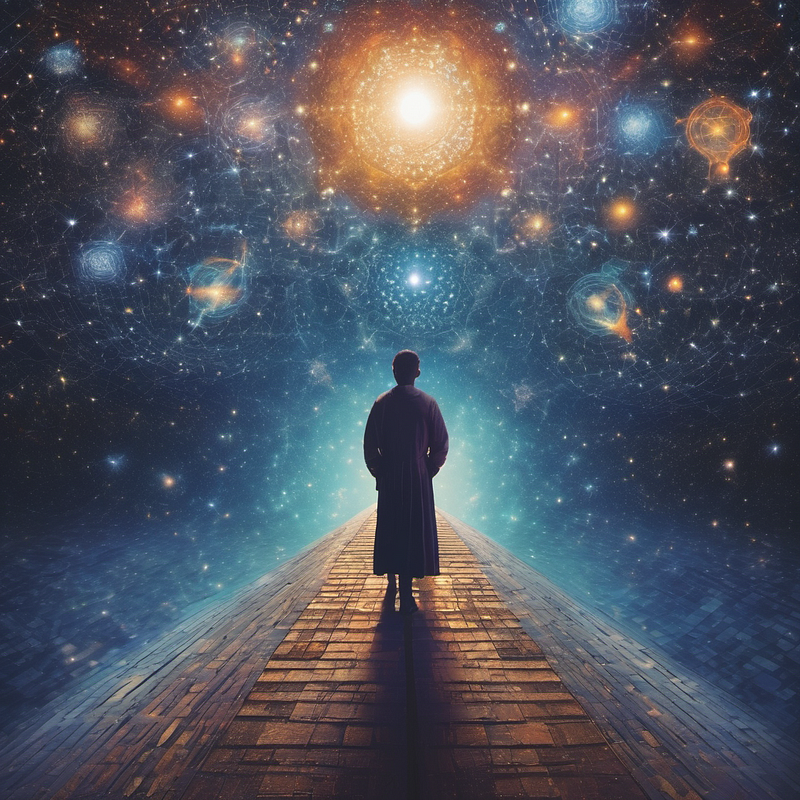
As discussions surrounding the Simulation Hypothesis gain traction, contemplating the role of spirituality within the context of a simulated universe becomes an intriguing and philosophical exploration. In a reality where our existence might be a meticulously crafted simulation, the question arises: What place does spirituality hold in a world seemingly governed by artificial constructs?
Defining Spirituality in a Simulated Universe:
Spirituality, often intertwined with concepts of the divine, the metaphysical, and the transcendental, takes on a unique hue when examined within the framework of a simulated reality. In this context, spirituality might be viewed as an exploration of the simulated realm’s deeper layers, an endeavor to connect with the fundamental truths that might exist beyond the programmed surface of our existence.
The Quest for Meaning and Purpose:
In a simulated universe, the quest for meaning and purpose becomes a profound journey. Spirituality, with its emphasis on understanding the nature of reality, consciousness, and existence, provides a lens through which individuals can seek purpose, even in a world that may, at its core, be a construct of advanced beings or entities.
Simulated Consciousness and Self-Discovery:
If consciousness is a simulated construct, spirituality takes on the role of an exploration into the nature of simulated selfhood. Concepts such as self-awareness, enlightenment, and personal transformation become avenues for navigating the simulated landscape and understanding the unique qualities of consciousness within this digital framework.
Ethical Considerations and Morality:
Spirituality often intersects with ethical considerations and moral frameworks. In a simulated universe, individuals might turn to spiritual principles to guide their actions, formulating a moral code that transcends the artificiality of their reality. The pursuit of goodness, compassion, and ethical behavior can serve as a guiding force in the face of simulated challenges.
Connection and Unity in Simulation:
Spirituality often emphasizes the interconnectedness of all beings. In a simulated universe, individuals might seek to forge connections that transcend the artificial boundaries of their reality. The quest for unity, harmony, and a collective consciousness may become a central theme in the spiritual exploration of simulated existence.
Simulated Mysticism and Transcendence:
Within the confines of a simulated universe, individuals may delve into simulated mysticism and seek moments of transcendence. The simulation hypothesis does not necessarily negate the possibility of higher planes of existence, and spirituality could provide a pathway to reaching beyond the simulated constraints, touching upon realms of consciousness that extend beyond the programmed boundaries.
As we grapple with the implications of the Simulation Hypothesis, the role of spirituality takes on a multifaceted significance. Whether as a guide to ethical living, a source of purpose, or a means of exploring the depths of simulated consciousness, spirituality in a simulated universe becomes a poignant and thought-provoking journey, inviting individuals to navigate the ethereal landscape and uncover the profound truths that may lie beneath the surface of their simulated reality.