
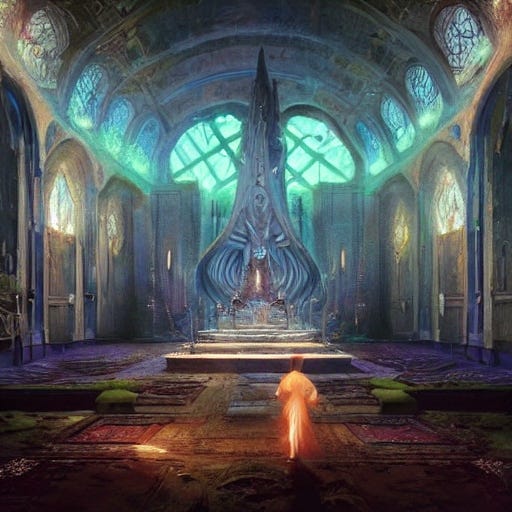
The Simulation Theory is a concept that challenges our understanding of reality, suggesting that our existence might be akin to a computer-generated simulation. While rooted in scientific inquiry and philosophy, the theory also raises intriguing questions about its potential religious implications. In this article, we’ll explore the Simulation Theory in detail and delve into how it intersects with religious perspectives.
The Simulation Hypothesis:
The Simulation Theory, popularized by philosopher Nick Bostrom, posits that there is a non-negligible probability that we are living in a computer simulation created by an advanced civilization. Bostrom frames the argument as a trilemma, considering the possibilities that future civilizations might have the capability and motivation to simulate conscious entities. This hypothesis has garnered attention in scientific and philosophical circles, sparking discussions about the nature of our reality.
Religious Overtones:
The Simulation Theory intersects with religious thought in several thought-provoking ways:
Creator and Creation:
- Many religious traditions propose the existence of a creator or a higher power responsible for the creation of the universe. The Simulation Theory, in a sense, aligns with this concept by suggesting the possibility of an intelligent creator, albeit one existing in a hypothetical, higher-dimensional reality.
Divine Design:
- The Simulation Theory prompts us to reconsider the idea of design in the universe. If our reality is a simulation, it implies a deliberate design by an external intelligence. This resonates with the notion of a divine plan or purpose within religious frameworks.
Afterlife and Beyond:
- The concept of an afterlife is central to many religions, where individuals continue their existence beyond the physical realm. In the context of the Simulation Theory, one might speculate that the end of our simulated reality could be a transition to a higher state of existence, echoing themes of spiritual transcendence.
Moral and Ethical Considerations:
- Religious teachings often provide moral and ethical guidelines for human behavior. The Simulation Theory introduces the idea that our actions and choices might be observed by an external intelligence, reminiscent of a cosmic moral order or divine judgment.
Existential Questions:
- Both religious and philosophical traditions grapple with existential questions about the nature of existence, purpose, and the ultimate meaning of life. The Simulation Theory amplifies these inquiries by challenging us to contemplate the nature of reality itself.
Challenges and Contemplations:
Faith and Evidence:
- The Simulation Theory doesn’t provide concrete evidence of a simulated reality; rather, it offers a speculative framework based on probability. This challenges individuals to navigate the intersection of faith and empirical evidence in their worldview.
Reinterpretation of Religious Texts:
- Some may interpret religious texts in light of the Simulation Theory, reimagining stories and metaphors as symbolic representations of a simulated reality. This reinterpretation raises questions about the adaptability of religious narratives in response to evolving scientific concepts.
Harmony or Conflict:
- For some, the Simulation Theory and religious beliefs may coexist harmoniously, offering a new lens through which to view spiritual concepts. Others may see a potential conflict between the two, as the theory challenges traditional religious narratives.
The Simulation Theory, with its blend of scientific speculation and philosophical inquiry, introduces a fascinating dimension to discussions about the nature of our existence. As individuals grapple with the implications of living in a simulated reality, they must navigate the complex interplay between scientific exploration and religious understanding. Whether viewed as a challenge or an opportunity for synthesis, the Simulation Theory invites us to explore the boundaries of our understanding and contemplate the profound mysteries that lie at the intersection of science and spirituality.