
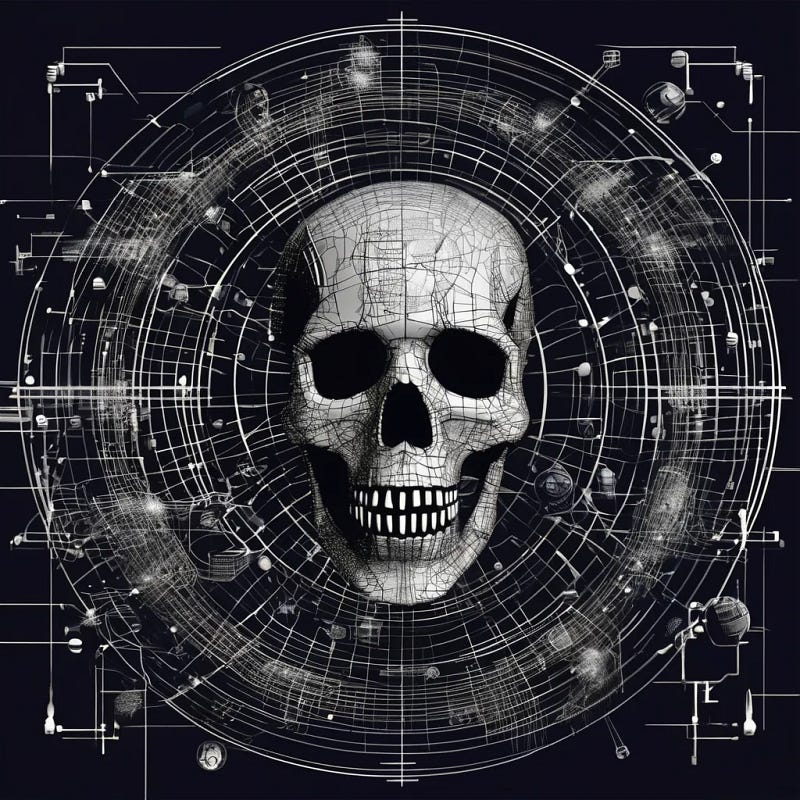
In the ever-expanding universe of philosophical and technological speculation, two intriguing concepts — the Simulation Hypothesis and the Dead Internet Theory — have captured the imaginations of thinkers and theorists alike. While each idea explores distinct aspects of reality, a closer examination reveals a surprising overlap in their implications and their perspectives on the nature of existence, perception, and the manipulation of information.
Understanding the Simulation Hypothesis
The Simulation Hypothesis posits that what we perceive as reality may be an elaborate simulation, akin to an ultra-advanced video game or virtual environment. Proposed most prominently by philosopher Nick Bostrom, this hypothesis suggests that a sufficiently advanced civilization could create simulations indistinguishable from “real” reality. In such a scenario, the world around us — including our experiences, memories, and even identities — could be artificially generated.
This hypothesis raises profound questions about the nature of existence. Are we conscious beings, or are we merely programmed to believe we are? If our reality is a simulation, who — or what — is running the program? These questions delve into the realms of epistemology, metaphysics, and even theology, challenging our understanding of what it means to “exist.”
Unpacking the Dead Internet Theory
The Dead Internet Theory, on the other hand, revolves around the idea that the internet is no longer a space for organic human interaction but is increasingly populated by bots, automated content, and artificial intelligence. According to proponents of this theory, a significant portion of the internet’s content is not created by humans but by algorithms designed to simulate human activity, drive engagement, and manipulate perceptions.
This theory raises concerns about the authenticity of the digital world. If much of what we encounter online is artificial, how does this affect our understanding of truth, trust, and reality itself? The Dead Internet Theory suggests that the internet, once a tool for human connection and free exchange of ideas, has been co-opted into a manipulated ecosystem of artificial engagement and fabricated narratives.
The Overlap Between the Two Concepts
At first glance, the Simulation Hypothesis and the Dead Internet Theory seem to operate in different domains. The former is a grand-scale philosophical exploration of reality itself, while the latter is focused on the nature of the internet and its role in modern life. However, their similarities become evident when we consider their shared themes:
- Artificial Realities and Perception Manipulation
Both theories suggest that much of what we perceive as “real” may be artificial. In the Simulation Hypothesis, this artificiality encompasses the entire universe. In the Dead Internet Theory, it is limited to the digital realm. In both cases, the implication is that our understanding of reality is filtered through artificial constructs, making it difficult to discern what is authentic. - The Role of Advanced Technology
Both theories hinge on the capabilities of advanced technology. The Simulation Hypothesis assumes the existence of a civilization advanced enough to simulate entire universes. Similarly, the Dead Internet Theory points to the increasing sophistication of artificial intelligence and algorithms capable of mimicking human behavior online. - Questions of Agency and Control
Both theories raise questions about who or what is in control. In the Simulation Hypothesis, the “simulators” could be an advanced civilization or a higher intelligence. In the Dead Internet Theory, control may lie in the hands of corporations, governments, or rogue AI systems. In both scenarios, human agency is diminished, with reality shaped by forces beyond our comprehension. - Implications for Human Identity
If the Simulation Hypothesis suggests that our identities are constructs within a larger program, the Dead Internet Theory suggests that even our interactions online — an increasingly significant part of modern life — may be influenced or manipulated by non-human entities. Both ideas challenge the notion of authentic, self-determined existence.
Philosophical and Practical Implications
The convergence of these theories highlights profound philosophical and practical concerns. If both our physical and digital realities are subject to artificial manipulation, how can we trust our perceptions, beliefs, or decisions? The overlap between these theories suggests that the line between the “real” and the “artificial” is becoming increasingly blurred.
Practically, the Dead Internet Theory invites scrutiny of the internet’s authenticity and transparency, urging users to critically evaluate the content they encounter. Philosophically, the Simulation Hypothesis challenges the very foundations of human existence, calling into question the nature of consciousness and the universe itself.
Conclusion
While the Simulation Hypothesis and the Dead Internet Theory arise from different contexts, their shared exploration of artificial realities and the manipulation of perception creates a compelling connection. Together, they paint a picture of a world where the boundaries between the real and the artificial are increasingly fluid, inviting us to rethink our assumptions about existence, technology, and the nature of truth. Whether viewed as speculative thought experiments or as warnings about the trajectory of technology, these theories challenge us to engage deeply with the mysteries of our reality — and the forces shaping it.
Like My Work? Want an Easy Way to Support Me?
Hi there! If you’ve enjoyed my work why not click the link below and Buy Me A Coffee? It’s simple and coffee keeps my creative and intellectual juices flowing!
Just click on the button below and it’ll take you to my Buy Me A Coffee page. Thanks so much for reading and supporting me!