
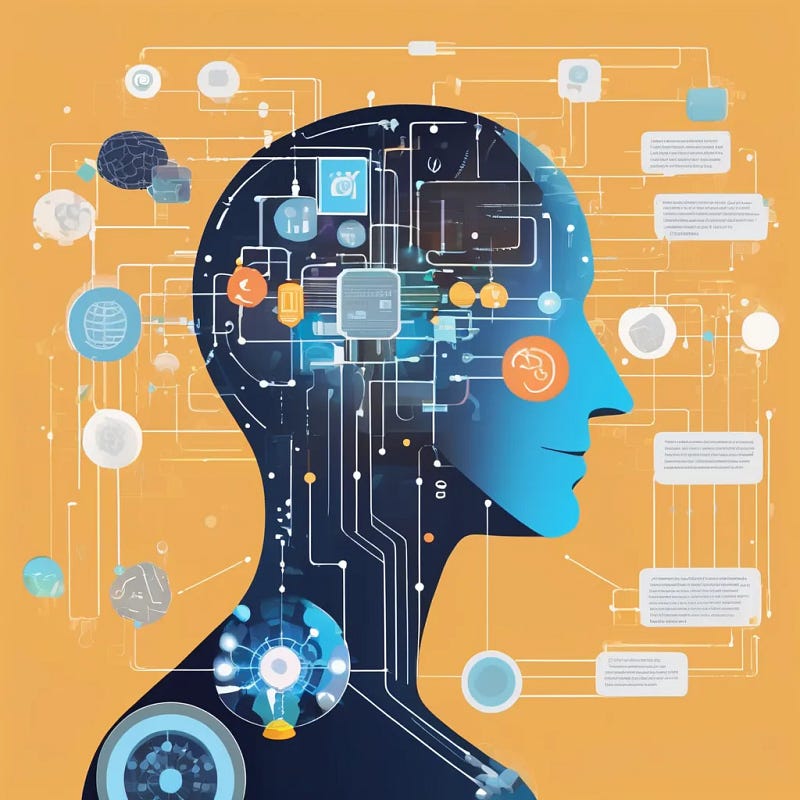
The intersection between intelligent agents in computer science and the simulation hypothesis presents a fascinating convergence of artificial intelligence, philosophy, and the nature of reality. The simulation hypothesis posits that reality as we know it could be a simulation, created by an advanced civilization or technology. Intelligent agents, which are entities that perceive their environment and act upon it to achieve goals, offer a compelling framework for understanding how such a simulated reality might operate.
Intelligent Agents: A Brief Overview
In computer science, intelligent agents are designed to interact autonomously with their environment, making decisions based on the input they receive. These agents are central to fields like artificial intelligence (AI), robotics, and automated systems. An intelligent agent:
- Perceives its environment via sensors.
- Acts on its environment through actuators.
- Rationalizes actions to maximize performance, based on its goals.
Agents range from simple reactive systems (like thermostats) to complex AI systems capable of learning, adapting, and making strategic decisions (like self-driving cars or AI in video games). These systems can operate autonomously, learn from experience, and optimize their interactions with their environment.
The Simulation Hypothesis: Reality as Code
The simulation hypothesis suggests that the universe and everything within it could be the result of computer code created by a higher-level intelligence. Essentially, what we perceive as reality might be nothing more than a simulation run on a vast computational system. In this view, all physical laws, human experiences, and even our consciousness could be part of this virtual framework.
How Intelligent Agents Relate to the Simulation Hypothesis
If our reality is indeed a simulation, it is plausible to assume that the entities within the simulation, including humans, could be conceptualized as intelligent agents. The same principles that govern AI systems today — perception, decision-making, learning, and goal-seeking — could theoretically apply to “simulated beings” inside a highly sophisticated virtual reality.
1. Human Beings as Intelligent Agents
In a simulated reality, human beings could function as complex intelligent agents. Just as AI agents in computer systems process inputs from their environment and act to achieve specific goals, humans process sensory information (vision, hearing, touch) and make decisions based on that input. Our neural networks could be analogous to the algorithms that drive intelligent agents in computational systems. The “goals” humans pursue — whether survival, reproduction, or self-actualization — could be objectives coded into the simulation’s architecture.
2. Simulation Controllers as High-Level Agents
The designers or controllers of the simulation — if they exist — might also be considered intelligent agents operating on a higher plane of the system. They would have the ability to interact with and manipulate the parameters of the simulation, much like a player controls characters in a video game. This higher-level agent could adjust environmental factors or insert “experiences” into the lives of simulated beings to observe their behaviors, akin to experiments conducted in scientific simulations today.
3. Learning and Adaptation in a Simulated Environment
One of the key features of intelligent agents is the ability to learn and adapt from experience. If our reality is a simulation, then the experiences and decisions we make as humans could be the result of a learning algorithm embedded in our existence. This mirrors the idea of reinforcement learning in AI, where agents adjust their behavior based on feedback from their environment to maximize their success. In the context of the simulation hypothesis, learning could be one of the fundamental purposes of the simulation itself.
4. Algorithmic Nature of Physical Laws
The rules that govern intelligent agents in simulations are often based on algorithms. If our reality is simulated, then the physical laws — gravity, electromagnetism, thermodynamics — might also be seen as algorithmic constructs, implemented by the simulation’s code to maintain consistency within the system. Just as intelligent agents operate within a set of rules defined by a program, humans and the natural world may be operating under a pre-defined set of parameters designed by a higher-level intelligence.
5. Simulation Boundaries and Anomalies
Just as AI agents in simulations sometimes encounter bugs or limitations due to imperfect code, human beings may experience anomalies or “glitches” in the matrix. Some theorists suggest that unexplained phenomena (e.g., déjà vu, near-death experiences) might be akin to glitches in a simulation, where the underlying code momentarily falters. Intelligent agents are designed to handle such anomalies by recalculating their actions, and it’s possible that human cognition and perception function similarly when faced with irregularities in the simulated environment.
The Role of Free Will in a Simulated Reality
A crucial philosophical question in both AI and the simulation hypothesis is whether the agents (whether human or artificial) truly possess free will. In the case of intelligent agents, decision-making is typically deterministic, based on algorithms and input data. In a simulated reality, one could argue that human beings, like AI, might be bound by the constraints of the system, responding to stimuli based on a programmed set of rules. However, if the simulation is sufficiently advanced, it may allow for a form of emergent free will, where simulated beings (humans) are capable of making complex, independent choices.
The intersection of intelligent agents and the simulation hypothesis provides an intriguing lens through which to examine reality, consciousness, and the nature of existence. Just as AI researchers develop agents to simulate complex environments and interactions, the simulation hypothesis suggests that our entire universe could be a similar, albeit far more advanced, simulation. The principles of intelligent agents — perception, decision-making, learning, and adaptation — could apply to both the entities within the simulation (humans) and the higher-level beings controlling it. Whether we are self-aware, intelligent agents within a cosmic simulation remains one of the most thought-provoking questions in both philosophy and computer science.
Like My Work? Want an Easy Way to Support Me?
Hi there! If you’ve enjoyed my work why not click the link below and Buy Me A Coffee? It’s simple and coffee keeps my creative and intellectual juices flowing!
Just click on the button below and it’ll take you to my Buy Me A Coffee page. Thanks so much for reading and supporting me!