
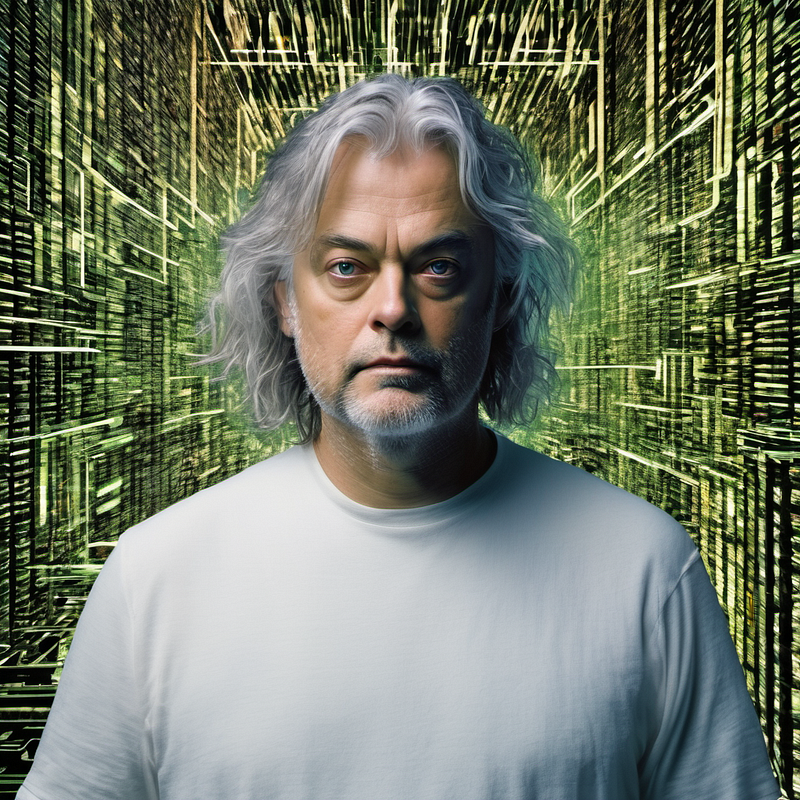
In his thought-provoking book “Reality+: Virtual Worlds and the Problems of Philosophy,” David Chalmers delves into the profound implications of living in a simulated reality. Among the many intriguing concepts he explores, one particularly captivating idea is the notion of a simulation theodicy — a framework for understanding the existence of evil and suffering within a simulated world.
What is Simulation Theodicy?
Theodicy, traditionally, is the attempt to reconcile the existence of a benevolent, omnipotent deity with the presence of evil and suffering in the world. In the context of a simulated reality, simulation theodicy addresses similar questions but within the framework of a created, virtual existence. Essentially, it seeks to understand why a simulated world, presumably designed by intelligent creators, would include experiences of pain, suffering, and moral evil.
Chalmers’ Argument in “Reality+”
David Chalmers posits that if we are indeed living in a simulation, the creators of this simulation — whom he refers to as “simulators” — would have reasons for incorporating the elements of our experience that we perceive as negative. These reasons can be speculative and multifaceted, ranging from the ethical and philosophical to the technical.
- Moral and Ethical Testing Grounds: One possibility Chalmers explores is that simulators might design a world with challenges and adversities as a means of moral and ethical testing. Much like how philosophers have speculated about the real world serving as a testing ground for human virtues, a simulated world with the presence of evil might be intended to test and refine the moral character of its inhabitants. This aligns with the idea that overcoming adversity can lead to growth and development, both individually and collectively.
- Realism and Plausibility: Another reason for the inclusion of suffering in a simulated world could be to enhance its realism. A perfect world devoid of any suffering or conflict might appear implausible and less immersive to its inhabitants. By incorporating elements of struggle and adversity, the simulators can create a more believable and engaging environment. This approach is akin to video game designers who introduce challenges to maintain player engagement and investment in the game.
- Existential and Experiential Value: Chalmers also suggests that experiences of pain and suffering might be integral to certain valuable experiences and existential insights. For instance, concepts like empathy, courage, and resilience often emerge in response to suffering. In a simulated world, these profound experiences and insights might be seen as essential components of a rich and meaningful life.
- Technical Constraints and Limitations: It’s also possible that the inclusion of suffering is a byproduct of technical limitations or constraints faced by the simulators. Creating a perfectly harmonious and flawless world might be beyond the capabilities of the simulators, or it might require computational resources and complexity that are not feasible. Thus, suffering might be an unintended consequence or a necessary trade-off within the simulation’s design.
- Unknown Purposes and Higher Understanding: Finally, Chalmers acknowledges that the ultimate purposes and motivations of the simulators might be beyond our comprehension. Much like the inscrutability often attributed to divine intentions in traditional theodicy, the reasons behind the design choices of our simulators might be rooted in a higher understanding or purpose that we, as simulated beings, cannot fully grasp.
The Philosophical Implications
Simulation theodicy, as outlined by Chalmers, challenges us to reconsider our assumptions about reality, suffering, and meaning. It bridges the gap between traditional philosophical questions and the cutting-edge realm of virtual worlds and simulation theory. By contemplating the reasons for suffering in a simulated existence, we gain new perspectives on the nature of our experiences and the possible intentions of our creators — whether they are gods or programmers.
In “Reality+: Virtual Worlds and the Problems of Philosophy,” David Chalmers offers a profound exploration of these ideas, encouraging us to question the very fabric of our existence. Whether we are living in a base reality or a highly sophisticated simulation, the search for meaning and understanding remains a central quest of human life. Simulation theodicy provides a fascinating lens through which to view this quest, blending the philosophical with the speculative in a manner that is both intellectually stimulating and deeply human.
David Chalmers’ concept of simulation theodicy invites us to explore the reasons behind the existence of suffering in a potentially simulated world. It challenges traditional views and opens up new avenues for understanding our experiences and the possible motivations of our creators. Whether as a test of character, a means of realism, a source of valuable experiences, or a consequence of technical limitations, the presence of suffering in a simulated reality adds depth to our philosophical inquiries and enriches our quest for meaning.
Like My Work? Want an Easy Way to Support Me?
Hi there! If you’ve enjoyed my work why not click the link below and Buy Me A Coffee? It’s simple and coffee keeps my creative and intellectual juices flowing!
Just click on the button below and it’ll take you to my Buy Me A Coffee page. Thanks so much for reading and supporting me!