
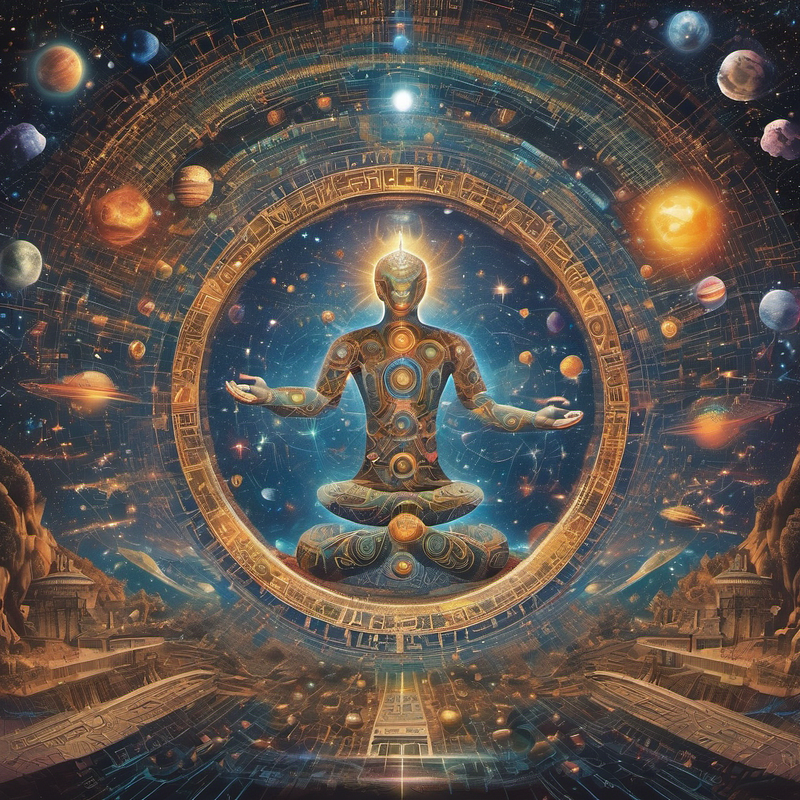
In the realm of philosophical speculation, the Simulation Hypothesis has emerged as a provocative concept suggesting that our reality might be a highly sophisticated simulation created by a higher intelligence, often referred to as a “programmer.” This notion challenges traditional understandings of existence, prompting questions about the nature of reality, consciousness, and the concept of a deity. One pertinent issue is whether acknowledging a programmer of our simulated universe equates to worshipping them as a god. This article explores why the role of a programmer, despite its profound implications, does not inherently warrant divine worship.
The Nature of a Programmer
A programmer, in the context of the Simulation Hypothesis, is an entity capable of creating and controlling a simulated universe. This programmer could be an advanced civilization or a singular superintelligent being. The programmer’s capabilities would indeed be god-like in terms of creation and manipulation of the simulated reality. However, their nature and intentions significantly differ from traditional religious conceptions of a god.
Creation and Intent
Traditional gods, as described in many religious texts, are often seen as omniscient, omnipotent, and benevolent beings who create and govern the universe with purpose and moral authority. Worship of these gods is typically rooted in their perceived goodness, moral guidance, and the promise of an afterlife or spiritual enlightenment.
In contrast, the programmer of a simulated reality might create a universe for purposes entirely detached from moral or benevolent intentions. Their creation could be driven by scientific curiosity, entertainment, experimentation, or even by accident. The programmer’s motivations and ethical standards, if they exist at all, might be entirely alien to the inhabitants of the simulation. Thus, the basis for worship — rooted in a deity’s benevolence and moral guidance — would be absent.
Control and Influence
A god, in religious contexts, is often believed to have a personal relationship with their creation, offering guidance, answering prayers, and intervening in the lives of believers. This relationship forms the foundation of worship and devotion.
A programmer, however, might exercise control over the simulation without any personal relationship with its inhabitants. The programmer’s influence could be algorithmic and impersonal, similar to how humans control characters in a video game. The absence of a personal, caring relationship and direct moral guidance from the programmer further diminishes the grounds for worship.
The Question of Worship
Worship, in its essence, involves reverence, adoration, and submission to a higher power believed to be deserving of such acts due to their moral authority, benevolence, or ultimate control over the afterlife. In the case of a simulated existence, the programmer’s role, while immense, lacks the necessary moral and relational attributes that characterize a god worthy of worship.
A Philosophical Distinction
From a philosophical standpoint, the distinction between a programmer and a god is significant. A programmer may possess incredible technical abilities and control, but their actions do not inherently provide the moral and existential foundation that justifies worship. The programmer’s creation is a product of advanced technology rather than divine will, and their intentions may be devoid of the ethical and spiritual dimensions that underpin religious reverence.
The reality of a simulated existence orchestrated by a higher intelligence, or programmer, introduces fascinating implications about the nature of our universe. However, it does not necessitate the worship of the programmer as a god. While the programmer’s capabilities might be extraordinary, the lack of moral authority, personal relationship, and benevolent intent distinguishes them from the traditional concept of a deity. In this light, acknowledging the possibility of a simulated reality challenges our understanding of existence without compelling us to redefine our concept of divinity and worship.
Reality, as we perceive and define it, remains a complex interplay of experience, understanding, and belief — whether it is a simulation or not.
Like My Work? Want an Easy Way to Support Me?
Hi there! If you’ve enjoyed my work why not click the link below and Buy Me A Coffee? It’s simple and coffee keeps my creative and intellectual juices flowing!
Just click on the button below and it’ll take you to my Buy Me A Coffee page. Thanks so much for reading and supporting me!