
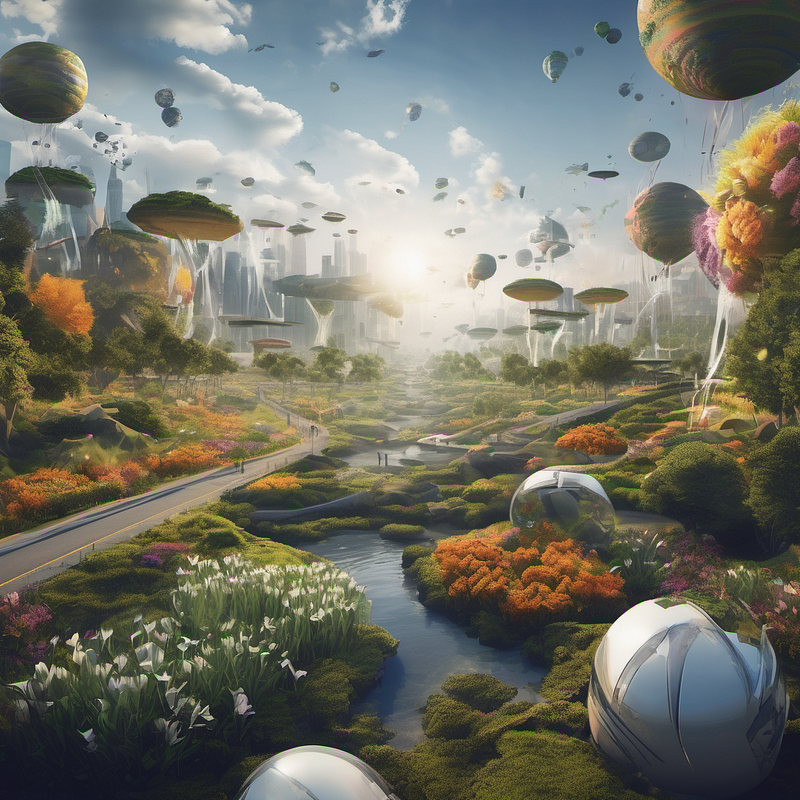
The concept of a simulated reality posits that our world, including natural phenomena, is a construct designed by an advanced civilization or artificial intelligence. Within this framework, adverse natural events like tsunamis, earthquakes, and global warming could serve several potential purposes:
1. Testing Resilience and Adaptability
Simulated adverse events might be engineered to test the resilience and adaptability of the inhabitants. Observing how societies respond to disasters can provide valuable data on human behavior, resourcefulness, and the effectiveness of social structures and technologies in crisis situations.
2. Environmental and Biological Evolution
Natural disasters could drive evolutionary processes within the simulation. By creating challenging environmental conditions, the simulation can facilitate the adaptation and evolution of species, leading to increased biodiversity and resilience. This mirrors natural selection and ecological dynamics observed in nature.
3. Ethical and Moral Development
Experiencing and responding to natural calamities could foster ethical and moral growth. These events often necessitate cooperation, compassion, and selflessness, encouraging inhabitants to develop and exercise virtues such as empathy, altruism, and social responsibility.
4. Dynamic and Realistic Simulation
To maintain a convincing and engaging simulated reality, incorporating unpredictable and adverse events could be essential. A world devoid of challenges would lack realism and depth, potentially leading inhabitants to question the authenticity of their environment.
5. Resource Management and Innovation
Adverse natural events often spur technological and infrastructural innovations. By presenting inhabitants with environmental challenges, the simulation encourages the development of new technologies, better resource management practices, and improved urban planning and disaster preparedness strategies.
6. Psychological and Emotional Complexity
Experiencing a range of emotions and psychological states, including those triggered by natural disasters, can enhance the complexity and richness of the simulated experience. This diversity of experiences can lead to personal growth, deeper relationships, and a more nuanced understanding of life.
In the context of a simulated reality, adverse natural events could serve multiple functions, from testing resilience and fostering ethical growth to driving evolution and innovation. These events contribute to the depth and realism of the simulation, enhancing the overall experience for its inhabitants. Whether for observational, developmental, or entertainment purposes, the inclusion of natural disasters in a simulated world underscores the complexity and intentionality behind such a constructed environment.
Like My Work? Want an Easy Way to Support Me?
Hi there! If you’ve enjoyed my work why not click the link below and Buy Me A Coffee? It’s simple and coffee keeps my creative and intellectual juices flowing!
Just click on the button below and it’ll take you to my Buy Me A Coffee page. Thanks so much for reading and supporting me!