
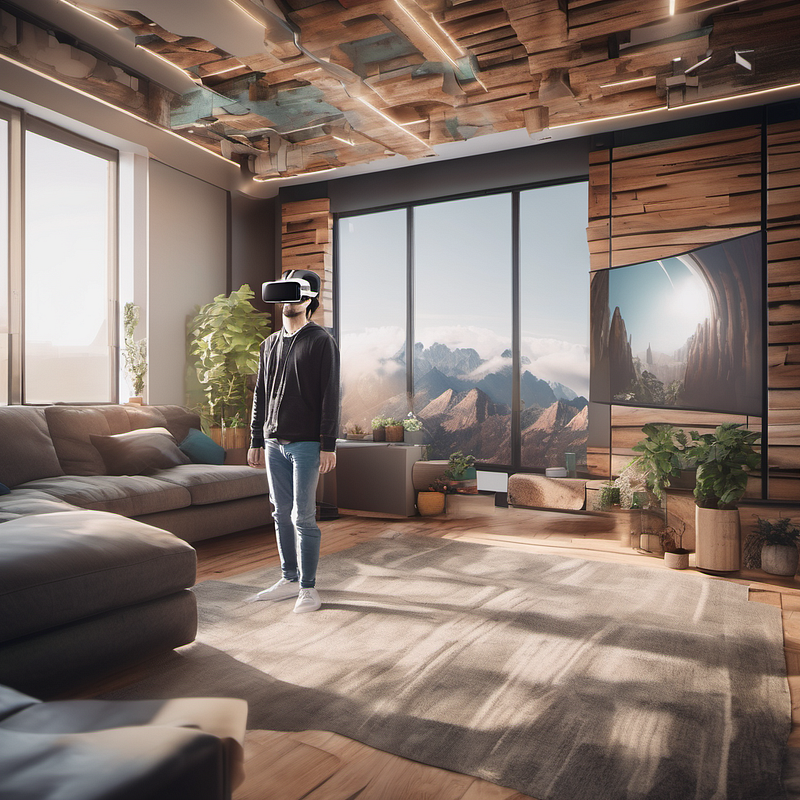
The advent of virtual reality (VR) has ushered in a paradigm shift in how we perceive and interact with the world around us. As technology continues to blur the lines between the physical and the virtual, a compelling argument emerges: virtual reality is as real as base reality. In this article, we will explore the key aspects that support the notion that the experiences within a virtual realm possess a profound and legitimate sense of reality.
Perception is Reality:
At the core of the argument lies the idea that perception shapes our reality. In both base reality and virtual reality, our sensory experiences define how we understand and engage with the environment. If our perceptions within a virtual space are vivid, immersive, and capable of eliciting genuine emotional responses, then the reality created within that space is, by definition, real to the experiencer.
Subjective Realism:
The concept of subjective realism suggests that the validity of an experience is determined by the subject’s perception of it. In this context, the richness of virtual experiences can evoke genuine emotions, reactions, and memories, making the virtual realm subjectively real for the individual. The emotional impact and personal significance of virtual interactions contribute to the authenticity of the virtual experience.
Neurological Responses:
Neuroscientific studies have demonstrated that the brain reacts similarly to stimuli within virtual environments as it does in the physical world. Whether feeling a sense of presence, fear, excitement, or empathy, the neurological responses generated within VR can be indistinguishable from those experienced in base reality. This suggests that the brain interprets and processes virtual stimuli as authentic sensory inputs.
Memory Formation and Recall:
Memories formed within virtual environments can be just as vivid and persistent as those formed in base reality. Studies have shown that individuals can recall and describe virtual experiences with a level of detail and accuracy comparable to their memories of real-world events. This phenomenon underscores the substantial impact that virtual experiences can have on the formation and retention of memories.
Social Interaction and Connection:
The social aspect of virtual reality further strengthens the argument for its reality. Meaningful connections formed within virtual spaces, whether through social VR platforms, collaborative environments, or multiplayer games, mirror the depth and significance of relationships in the physical world. Shared experiences, emotions, and interactions contribute to a sense of real connection and community.
Technological Advancements:
The continuous improvement of VR technology enhances its capacity to replicate the complexities of the physical world. High-quality graphics, realistic physics, and immersive soundscapes contribute to the overall sense of realism within virtual environments. As technology progresses, the distinctions between base reality and virtual reality become increasingly subtle.
Immersive Storytelling and Empathy:
Virtual reality has demonstrated its potential to evoke empathy and understanding by immersing users in narratives from different perspectives. The ability of VR to place individuals directly within diverse scenarios fosters a sense of shared humanity and emotional connection, reinforcing the argument that the experiences within virtual reality are as real as those in base reality.
As technology advances and virtual reality becomes more sophisticated, the line between base reality and virtual reality continues to blur. The richness of experiences, the depth of emotional engagement, and the neurological responses generated within virtual environments all contribute to the argument that, for the experiencer, virtual reality is as real and meaningful as base reality. The ongoing evolution of VR technology and its expanding role in various fields further underscore the transformative potential of virtual reality in shaping our perceptions of reality itself.