
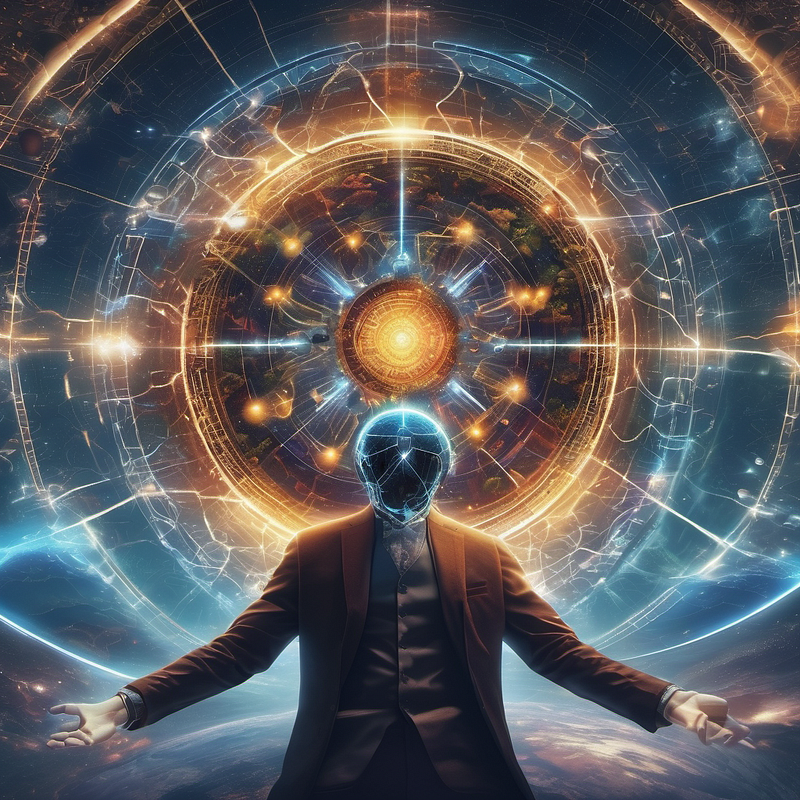
In the vast landscape of theological inquiry, the concept of God has been central to human understanding of existence, morality, and purpose. Yet, in an age where the boundaries between reality and simulation blur, where does the notion of divinity stand? Can the idea of God coexist within the framework of a simulated reality, or does it take on new dimensions altogether? As we delve into this thought-provoking topic, we embark on a journey to re-imagine the divine in a world where reality itself may be simulated.
The premise of a simulated reality posits that the universe we perceive is a construct, generated by advanced technology or higher-dimensional beings. Within this paradigm, the traditional concept of a divine creator takes on intriguing new possibilities. If our reality is indeed the product of a simulated environment, could the creators of this simulation be considered godlike beings?
One interpretation of this idea suggests that the creators of the simulation, with their ability to shape and control our perceived reality, may embody qualities traditionally associated with divinity. Just as religious texts describe a supreme being that oversees and governs the universe, the entities responsible for our simulated reality could be seen as analogous to gods, wielding immense power and influence over the lives of their simulated inhabitants.
Furthermore, the concept of omniscience and omnipotence takes on a new significance within the context of a simulated reality. If the creators of the simulation possess complete knowledge and control over every aspect of our existence, it raises profound questions about free will, destiny, and the nature of reality itself. Are we mere puppets in a cosmic theater, or do we possess agency within the confines of the simulation?
Another intriguing aspect of re-imagining God within a simulated reality is the idea of multiple realities or simulations coexisting simultaneously. Just as we create virtual worlds and simulations within our own technological systems, it’s conceivable that there could be countless other simulated universes created by different entities or civilizations. In this scenario, the concept of a singular, omnipotent God gives way to a more decentralized notion of divinity, with multiple creators overseeing their own respective simulations.
However, the concept of God in a simulated reality also raises challenging philosophical questions. For instance, if our reality is the product of a simulation, what does it mean for the concept of transcendence? Can we conceive of a realm beyond the confines of the simulation, or are we forever bound by the limitations of our simulated universe? Moreover, the ethical implications of a simulated reality — including the suffering of sentient beings within the simulation — force us to grapple with the morality of the creators and our own place within their creation.
The concept of God in a simulated reality offers a rich tapestry of philosophical inquiry and speculation. As we explore the implications of living in a world where reality itself may be simulated, we are challenged to reconsider traditional notions of divinity, transcendence, and the nature of existence. Whether viewed as godlike creators or as entities within a vast network of simulated realities, the concept of divinity in a simulated reality invites us to contemplate the mysteries of our universe with humility and wonder.
Like My Work? Want an Easy Way to Support Me?
Hi there! If you’ve enjoyed my work why not click the link below and Buy Me A Coffee? It’s simple and coffee keeps my creative and intellectual juices flowing!
Just click on the button below and it’ll take you to my Buy Me A Coffee page. Thanks so much for reading and supporting me!